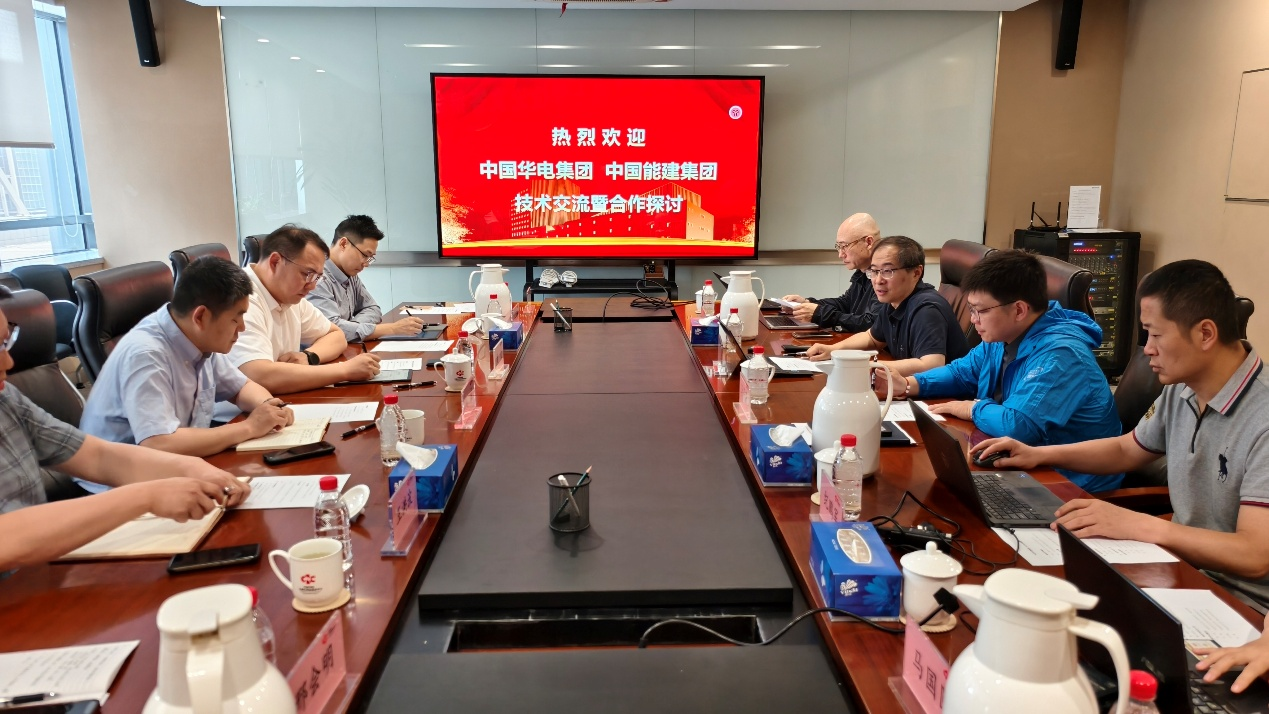
CNIC Conducts Technical Exchanges on Computing-Power Grid Synergy with China Huadian and China Energy Engineering Group
Computer Network Information Center, CAS, China Huadian Corporation, and China Energy Engineering Group Hold Symposium on Computing-Power and Power Grid Synergy
On May 14, 2026, the Computer Network Information Center of the Chinese Academy of Sciences (CAS) held a thematic symposium with China Huadian Corporation (CHD) and China Energy Engineering Group (CEEC) on the synergistic development of computing power and power grids. The symposium focused on core issues including new energy accommodation, coordinated dispatching of computing and power resources, and the development of AI applications, facilitating technical exchanges and discussions on potential collaboration.
At the symposium, Zhou Bo, Member of the Party Committee of CHD Sichuan Company, presented an overview of CHD and CHD Sichuan Company, as well as their planning and deployment for computing-power and power grid synergy. He proposed the concept of deploying distributed computing facilities in Western Sichuan, aiming to solve the challenge of new energy transmission through a model of "local accommodation, conversion via computing power."
Wang Hongbo, Director of CEEC Digital Technology Company, shared CEEC's experience in the construction and operation of green computing hubs in Western China. Zhou Xu, Director of the Advanced Network Technology and Application Development Department at the CAS Computer Network Information Center, and Li Jingjing, Director of the Technology Development Department for Science Cloud Operations, presented the Center's research on computing-power networking technologies, experimental applications of computing-power and power grid synergy, and the AI infrastructure of the CSTCloud (China Science and Technology Cloud).
The three parties reached a consensus based on the core concept of "computing-power and power grid symbiosis." They agreed to leverage their respective strengths to actively explore an integrated development model combining distributed computing facilities with new energy bases. Through technological breakthroughs addressing key challenges such as network transmission and elastic scheduling, they aim to build a cross-enterprise, cross-regional computing resource pool, providing diversified solutions for the national "East Data, West Computing" strategy.