
CNIC has made progress in Data-Driven Intelligent Process Iteration for Sintered NdFeB Magnets
Sintered Neodymium-Iron-Boron (NdFeB) magnets are core components in cutting-edge technologies such as electric vehicles and wind turbines. Recently, the Computer Network Information Center (CNIC) of the Chinese Academy of Sciences (CAS), in collaboration with the Ganjiang Innovation Academy of CAS, successfully constructed the first "Industry-Academia" dual-domain database containing nearly 2,000 samples.
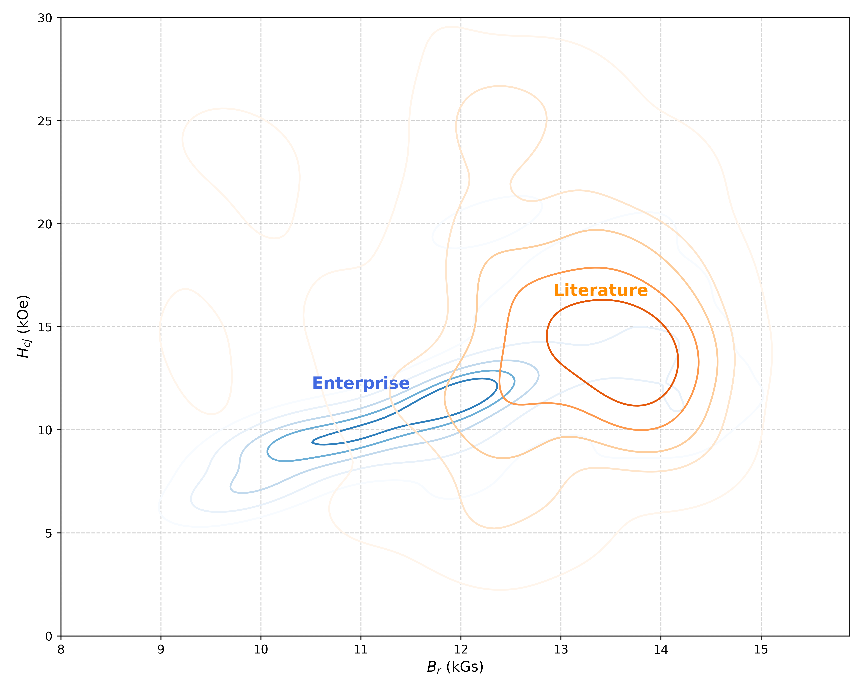

Utilizing High-Performance Computing-assisted Machine Learning (HPC-assisted ML/QML)—including classical models like Random Forest (RF), XGBoost, and Support Vector Regression (SVR), as well as quantum machine learning models like Quantum-Enhanced Support Vector Regression (QSVR)—the team systematically investigated the effectiveness of data selection strategies within a virtual experimental environment.
The research team quantitatively revealed the fundamental design differences between the industrial sector, which focuses on "cost and stability" and the academic sector, which pursues "performance limits." They provided a methodological framework for the continuous iteration of intelligent production processes applicable to "composition-process-property" relationships. Additionally, the study offers a methodological blueprint for integrating Quantum Kernel Methods (QSVR) into data-efficient workflows.
These research results have been accepted and published by npj Computational Materials (CAS Q1, IF=11.9). The first author is Dr. Lianhua He from the Department of High-Performance Computing at CNIC, while the corresponding authors are Associate Researcher Haibo Xu from the Ganjiang Innovation Academy and Associate Researcher Yingjin Ma from the Department of High-Performance Computing at CNIC. This work was supported by the National Key Research and Development Program of China, the National Natural Science Foundation of China, the Strategic Priority Research Program of the Chinese Academy of Sciences, and the Youth Innovation Promotion Association of CAS.
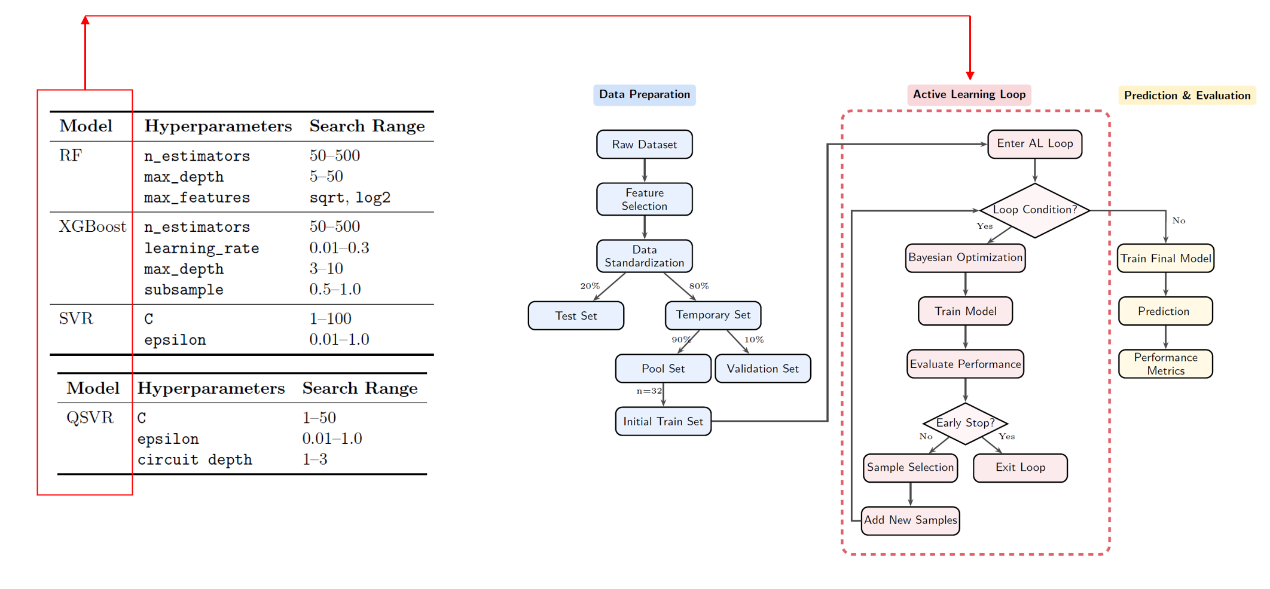
A Framework for Data Selection and Magnetic Property Prediction Based on Active Learning and Multiple Model Kernels